01
Organizational Memory
What the organization has already learned, available at the moment it is needed.
Everything preservedWhat matters, remembered

The Organizational Intelligence Firm
Errors that return. Decisions that wait on whose number is right. Knowledge that leaves when people do. CERNYVA finds where it happens, what it costs, and what to change first.
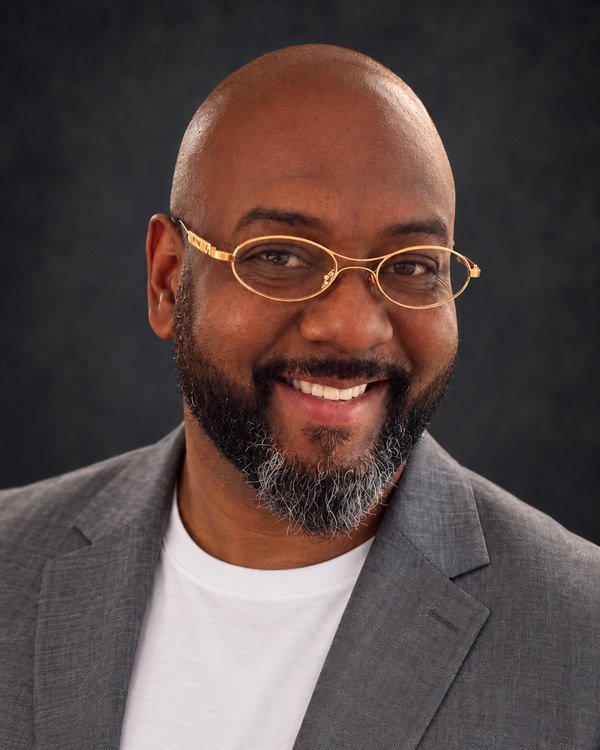
 Enrique Guzmán, founder. For decades he has helped global organizations become accountable for what they do through data, governance and change management, side by side with their teams until the ownership is theirs.
Organizational Intelligence is an organization’s ability to act on what it knows, and to keep getting better at it.

Organizational Intelligence
The real capability lies underneath: converting what the organization knows into how it acts, so that each cycle leaves it more capable than the one before. It rests on five capabilities.
When your best person leaves, what stays? That is the organizational capability.
What the organization has already learned, available at the moment it is needed.
Everything preservedWhat matters, remembered

Knowledge that belongs to the organization, not only to the person who holds it.
Held by one personHeld by the organization

Seeing what is happening while it is still a signal, before it becomes a crisis.
Same informationMeaning emerges

The same number meaning the same thing in every function that uses it.
BusyCoordinated

Experience turned into standards, routines and behaviour that outlast the people who lived it.
What happenedWhat it changed
Swipe · 5 capabilities →
Culture
Every organization already has a culture: what it does without being asked. The five capabilities make it visible, and they are where it changes.
Executive Diagnostic · From evidence to decision
Organizations face consequential challenges before they have a clear view of what is happening, what is holding them back, or which course of action is justified.
The Executive Diagnostic creates a sound basis for deciding what to do next. It does not assume that a transformation is necessary or that technology is the answer. The starting point is the organization’s challenge, not a predetermined solution.
6–8 weeks · Scope agreed in writing · An executive report with options and a reasoned recommendation · Engagement parameters
The question, the decision it informs, the boundaries.
Evidence, decisions, information flows, real ways of working.
Explanations tested. Facts separated from assumptions.
Options, trade-offs and a reasoned recommendation.
Leadership decides what to change, and whether to change at all.
Week 16–8 weeks
After the decision
The recommendation is independent of any further work with CERNYVA. If leadership decides to act, CERNYVA can support the work through advisory, change management or fractional leadership, but that is a separate choice, made once the evidence is in.
Three months after the executive readout, a 90-minute follow-up with leadership is included: what was decided, and what has changed since.
What transformation do we actually need, before deciding how to pursue it?
What is preventing us from achieving the outcome we expect?
Which of the options before us is right, and what must we know before committing?
What would happen if critical people, knowledge or conditions changed?
What changes
Many organizations pay for the same answer more than once, without recognizing that they have met the problem before. CERNYVA helps leadership recognize those patterns, so the next costly error, the next repeated engagement or the next misdirected investment is seen before it is paid for.
People and culture
Knowledge is shared rather than held. Owners are named and accountable. Less depends on a few individuals, and new people become effective sooner.
Process
The same errors stop returning. Less rework, fewer exceptions handled by hand.
Systems
Technology, data and AI investments deliver what they were bought to deliver, instead of adding another layer.
Economics
Costs accepted as the nature of the business become visible, and avoidable. Decisions are taken sooner, on numbers everyone trusts.
Services
Where the organization wants to go further, CERNYVA helps build what sustains it: clear roles and accountability, documentation that is used, and knowledge that stays when people move.
How the change is carried
Six cases
Six different problems, one organizational pattern. Five of these happened inside large, well-run organizations. The sixth happens in almost all of them.
01
The people who see the numbers and the people who see what is happening describe the same reality in terms the other cannot use. The organization carries two versions of the truth, and trusts neither.
Two versions of the truthOne trusted answer
02
Each country knows its own number. No two count the same way, so the whole can never be assembled. Each number is right where it was made.
Each part counts its own wayThe whole can see itself
03
Postal codes. Thirteen different sources across the organization, for data that should have had one. Each was built to solve the same problem, and each time it looked new. The organization paid the full price thirteen times, and called it the nature of the business.
Thirteen sourcesOne source
04
Sales says 102 million. Finance, 87. Operations, 95. Every meeting opens with whose number is right, and the question that matters keeps getting delayed.
Whose number is right?What do we do about it?
05
A global fashion brand launched an exclusive collection at 700. Nobody had given the number a currency. In one market it went live in the wrong one, and the collection sold out at the wrong price.
A numberA number with its meaning
06
It happens in almost every organization. A critical process runs because a few people know how. No one defined the role; everyone relied on the people. The day one of them leaves, the organization discovers it never owned what they knew.
Expertise of the fewCapability of the role
In each case, the parts were working. What failed belonged to none of them. Why it happens is different every time, and finding out is where the work begins.
A year from now, will your organization be wiser, or just a year older?
The CERNYVA Five Questions
There is no score and no right answer to aim for. Read each question slowly, and answer it honestly about your own organization.
Organizational MemoryWhen a familiar problem returns, does the organization recognize what it already learned, or does it start over?
Information CapitalIf the one person who truly gets it leaves tomorrow, do we keep that knowledge, or do we have to start from scratch?
Collective SensemakingBy the time the organization sees a problem, is it still a signal, or already a crisis?
CoordinationThe number is right. Is everyone sure it means the same thing?
Adaptive LearningA year from now, will the organization be wiser for what it lived through, or just a year older?
If any of these questions made you uncomfortable, the problem may not be your technology. It may be how your organization turns what it knows into what it can do.

Perspectives · New capability
Transformation is what the organization becomes capable of doing.
New technology, old organizationNew capability, new organization
The story behind the name
DISCERN
To discern is not simply to know.It is to distinguish: to separate what matters from what does not, and to recognize the differences that change what something means.
Organizations have never had more information. Data, systems, expertise, dashboards and now AI make it possible to know more, measure more and produce more answers than ever before.
And yet more information does not necessarily produce better understanding. A number can be accurate and still mean the wrong thing. Two parts of the same organization can look at the same reality and see something different. A problem can be solved several times without the organization realizing it has solved it before.
That idea became the starting point for CERNYVA.
Many organizations already know more than they use. What often breaks is the step from knowing to doing.
Enrique Guzmán has spent more than twenty-five years inside global organizations, building enterprise data, governance and transformation capability from the ground up, on both the business and technology sides, and above all across the line between them.
His experience spans chemicals and distribution, retail and consumer goods, fashion and regulated consumer products, in multinational operations across dozens of countries and under public-company control requirements. Again and again he found the same thing: organizations that knew what they needed to know, and could not turn it into what they did.
He founded CERNYVA to name that capability and to help organizations build it.
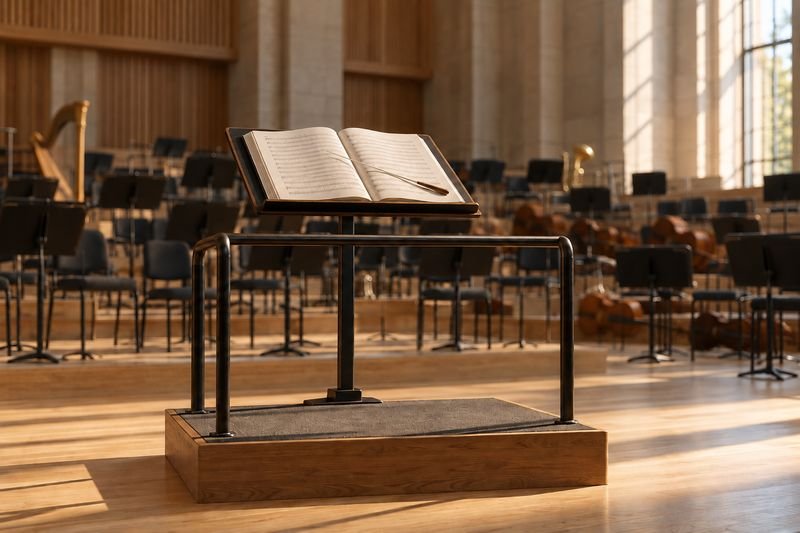
For four decades he has also played in symphonic orchestras, where what matters most belongs to no single musician.
Where the approach was built
Consumer products, regulated and listed
~90 markets
Built the enterprise data capability from zero in a recently listed, SOX-compliant group. The business-led operating model is in use across eight domains.
Chemical distribution, global leader
70+ countries
Turned regional data teams that worked in isolation into one global team, with shared domains, ownership and identical processes. Onboarding of customers, suppliers and products became shorter.
Home furnishings retail, global leader
32 countries
Transformed a fully technical team into a business-facing capability, and designed the operating model across all markets.
Fashion, global brands
Global
Built governance and master data from scratch, co-designed the GDPR data framework with Legal, and aligned governance with SOX.
Oil and gas, global leader
Global
Designed the data governance and master data framework for a global programme. Once implemented, it established a single way of working across markets and regions.
Consulting for global groups
Global
Data governance and master data design for global leaders in brewing, healthcare, biotechnology, insurance and consumer goods.
Thinking
Contact
About a question in front of you, a decision ahead, or a change that is not landing. CERNYVA would be glad to hear it.
A first conversation
30 minutesNo preparation neededNo commitment
What would you like to talk about?
Your booking, email or message will mention: the Executive Diagnostic.
How would you prefer to start?
Every message is read and answered by Enrique personally. Or call +39 333 851 7763.
Monza, Italy
Advising organizations worldwide