
CERNYVA

Executive Workshops

Your organization, on the table.

Two workshops, each built around a real situation in your organization: a problem that keeps returning, or a change that has to take hold. Participants work on it together and leave with something they can act on.

More than an introduction, less than a strategy: a day of work on your own case.

Half day or full day6–12 participantsOne real case, agreed in advanceWritten record within a week

A limestone wall with one crack repaired twice along the same line, an older patch and a newer one, with a trowel and a closed notebook on the shelf below.

Organizational Intelligence

Organizational Déjà Vu

The problem you already solved. Again.

Why do capable organizations keep repeating the same problems?

When it is worth a day

  • A problem has been “solved” more than once, and is back.
  • A new project is about to repeat an earlier one.
  • Two functions disagree about which number is right.

Works well with a leadership team, heads across functions, or the team of a single head.

Starting from a problem that has returned, participants reconstruct what was tried, separate facts from interpretations, and use the five capabilities of Organizational Intelligence to see where to look deeper.

  1. House rules10 min
  2. The one that came back25 min
  3. Previously, on…40 min
  4. Same number, different story35 min
  5. Through five lenses55 min
  6. Prove us wrong40 min
  7. Where to look next20 min

They leave with Why the problem deserves a different kind of investigation, the readings that diverge across functions, and two or three working hypotheses.

  1. House rules10 min
  2. The one that came back30 min
  3. Previously, on…50 min
  4. Through five lenses75 min
  5. Follow the decision75 min
  6. Prove us wrong90 min
  7. Where to look next60 min

They leave with How the problem reproduces itself, one real decision followed across functions, and prioritized hypotheses with the evidence needed to test them.
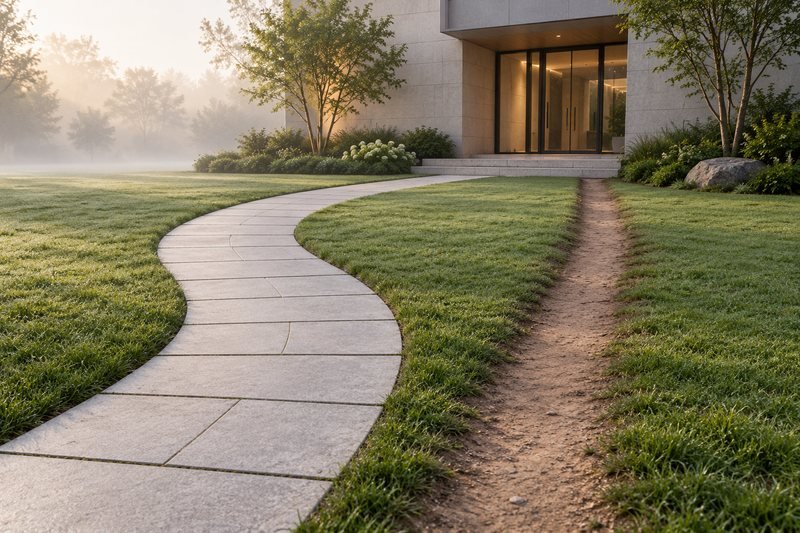
A designed stone path curving across a lawn towards a building entrance, and beside it a straight footpath worn into the grass by the people who actually use it.

Change Management

From Memo to Habit

Nobody adopts a slide.

What needs to be true for change to actually happen?

When it is worth a day

  • A change has been announced, and daily work has not moved.
  • A new system, structure or way of working is about to roll out.
  • A sponsor needs those who will carry the change on the same page.

Works well with heads leading a change in a business unit or department, on their own or with their team.

Working on a concrete change, participants look at who it affects, what will be different on Monday morning, where adoption is likely to break, and what sponsors must do differently themselves.

  1. Say it in one sentence25 min
  2. Monday morning45 min
  3. Where it breaks45 min
  4. What must be true55 min
  5. Test before you roll out35 min
  6. Names, not intentions20 min

They leave with Who must change which behaviour, and the main barriers to adoption.

  1. What good looks like30 min
  2. Monday morning60 min
  3. Where it breaks75 min
  4. The sponsor goes first60 min
  5. Beyond the announcement60 min
  6. Small bets60 min
  7. Names, not intentions45 min

They leave with First adoption commitments: owners, enabling conditions, small trials, and signs of adoption that can be observed in daily work.

Indicative agendas, adapted to each case. Download the full agendas (PDF)

The one requirement

Without a case, there is no workshop.

A case is an observable situation, not a verdict about people. “Our people resist change” is an interpretation; a rollout that has stalled in two of five sites is a case.

Before

The case is agreed

  • The case on one page, with two or three examples of where it shows.
  • The sponsor agrees the case, the expectations and the limits in a 30 to 45 minute conversation.
  • Each participant shares a short individual reading, so the room does not settle on the most senior view.

The day

More than an introduction, less than a strategy

Participants work on their own situation and leave with a shared reading and first decisions. No organization builds a change or Organizational Intelligence strategy in a day.

In person, in English or Spanish. Half day: about four hours. Full day: about six and a half working hours, plus breaks and lunch. A dedicated online format for teams spread across locations.

After

A record, and a choice

  • Within a week, a workshop record of three to five pages that keeps apart what was observed, reported, interpreted, hypothesized and decided.
  • What comes next is the client’s decision. After Organizational Déjà Vu, it is often the Executive Diagnostic; after From Memo to Habit, support while the change is carried out. CERNYVA can take that work on.

Start from the situation


A first conversation establishes which workshop fits, and whether a workshop is the right step at all.